
Abdelbasset Ghalgaoui 1,2,*, Rihab Salhi 3, Sawsen Rahmani 3, Yasmine Darrag 4, Imen Achouri 5,6
- Department of Nursing, Hamad Medical Corporation (HMC), Doha, Qatar.
- Institut Universitaire de Formation des Cadres (INUFOCAD), Port-au-Prince, Haiti.
- Higher Institute of Nursing Sciences of Tunis, Tunis, Tunisia.
- Private College of Nursing, Arar, Saudi Arabia.
- Higher Institute of Sport and Physical Education of Sfax, University of Sfax , Sfax, Tunisia.
- Research Laboratory Education, Motricity, Sport Health EM2S, LR19JS01, High Institute of Sport and Physical Education of Sfax, University of Sfax, Sfax, Tunisia.
* Corresponding author: Abdelbasset Ghalgaoui, Graduate Registered Nurse, Department of Nursing, Hamad Medical Corporation (HMC), Doha, Qatar. PhD Student in Education and Governance, Institut Universitaire de Formation des Cadres (INUFOCAD), Port-au-Prince, Haiti. Email: ghalgaouiabdelbasset@gmail.com
Cite this article
ABSTRACT
Introduction: Clinical simulation has become an essential strategy in nursing education, particularly for developing cognitive skills such as situational awareness (SA), which is critical for patient safety and effective clinical decision-making. However, evidence on the impact of simulation on SA among nursing students in Tunisia remains limited.
Objective: To evaluate the effect of clinical simulation on the situational awareness of final-year nursing students at the Higher Institute of Nursing Sciences of Tunis.
Methods: A quantitative, quasi-experimental, longitudinal study was conducted with 133 final-year nursing students during the academic year 2024–2025. Situational awareness was assessed using an adapted Situation Awareness Global Assessment Technique (SAGAT), measuring perception, comprehension, and projection. Assessments were performed before simulation training and three months after the intervention. Data were analyzed using descriptive statistics and Wilcoxon signed-rank tests.
Results: Significant improvements were observed across all dimensions of situational awareness. Mean perception scores increased from 3.75 (SD = 1.25) to 3.98 (SD = 1.19), comprehension from 0.96 (SD = 0.67) to 1.17 (SD = 0.62), and projection from 0.64 (SD = 0.86) to 1.17 (SD = 0.80). The total situational awareness score increased from 5.35 (SD = 1.95) to 6.32 (SD = 1.76). All differences were statistically significant (p < 0.001).
Conclusion: Clinical simulation significantly enhances nursing students’ situational awareness, with sustained effects observed three months post-intervention. These findings support the integration of structured simulation-based training into nursing curricula to strengthen cognitive competencies and improve patient safety.
Keywords: Clinical competence; Nursing education; Simulation; Situation awareness; Students
INTRODUCTION
Nursing education has increasingly embraced simulation as a key component of training, aiming to enhance various aspects of clinical competence among students. Clinical simulation has become a cornerstone of modern nursing education, offering a safe and controlled environment for students to practice and refine clinical skills, integrate theoretical knowledge, and develop complex cognitive competencies before exposure to real patients[1–3]. Simulation offers a controlled environment where nursing students can practice and refine their skills without risking patient safety. It provides an opportunity to engage in realistic scenarios that mimic real-life situations, allowing students to develop critical thinking and decision-making skills crucial for effective patient care. It is essential for cultivating nursing students’ knowledge, skills, collaboration, and confidence[4–7].
The role of nurses in the healthcare system is critically important. Multiple scoping review and systematic reviews studies show that clinical expertise, situational awareness, interprofessional coordination, and specialized training across different hospital departments are essential for significantly improving patient safety, care quality, and clinical outcomes[8–12]. Given the crucial role of nurses in patient care, simulation‑based training is essential for enhancing the situational awareness of future nurses.
Situation awareness, the ability to perceive, comprehend, and predict information about the environment and ongoing situations[13].It is fundamental for nurses to provide safe and effective care. Effective situation awareness allows nurses to anticipate potential issues, make informed decisions quickly, and respond to changing conditions in a timely manner. However, despite its importance, research specifically examining the impact of simulation on SA in nursing students remains limited. A recent scoping review suggests that SBE may be effective in cultivating SA skills, yet highlights a paucity of experimental studies and standardized assessment methods[14–17].
Furthermore, there is limited research focusing on the specific impact of simulation-based training on situation awareness among nursing students in Tunisia.
In Tunisia’s context, where nursing education is evolving rapidly to meet international standards. Robust learner support and multimodal engagement are the key drivers of nursing students’ satisfaction and self‑confidence in simulation‑based education[18]. while adding a structured, hands‑on simulation session to traditional lectures markedly boosts nursing students’ BLS‑CPR knowledge and psychomotor skills[19]. Although, some studies focus on affective reaction, cognitive learning, and procedural learning, there is no research examining real‑time cognition by assessing students’ situational awareness. Understanding how simulation affects situation awareness can provide valuable insights. The Higher Institute of Nursing Sciences of Tunis plays a pivotal role in shaping future nurses in the country. Assessing the impact of simulation on students’ situation awareness at this institution could offer important implications for educational strategies and curriculum development.
This research seeks to fill a gap in the current literature by exploring how simulation influences the situation awareness of nursing students at the Higher Institute of Nursing Sciences of Tunis. By investigating this relationship, the study aims to contribute to the improvement of nursing education practices and enhance the overall quality of healthcare training in Tunisia.
Situation awareness, the ability to perceive, comprehend, and predict information about the environment and ongoing situations, is fundamental for nurses to provide safe and effective care. Effective situation awareness allows nurses to anticipate potential issues, make informed decisions quickly, and respond to changing conditions in a timely manner. Despite its importance, there is limited research focusing on the specific impact of simulation-based training on situation awareness among nursing students in Tunisia.
MATERIALS AND METHODS
Study Design
A single-group pre- and post-test quantitative, quasi-experimental, longitudinal design to evaluate the impact of simulation-based training on the situational awareness (SA) of final-year nursing students at the Higher Institute of Nursing Sciences of Tunis. The study was conducted in a controlled environment using simulation scenarios that mirror real-life clinical situations.
Assessments of situational awareness were conducted both before and three months after the simulation training to evaluate both immediate and retained effects.
Study period
2024–2025 academic year.
Participants
All final-year students enrolled in the Bachelor of Science in Nursing program at the Higher Institute of Nursing Sciences of Tunis were invited to participate. The anticipated sample size is N=133 students.
Inclusion criteria
- Completion of relevant coursework in clinical nursing.
- Provision of informed consent to participate.
Exclusion criteria
- Inability to attend all required sessions or follow-up assessments due to scheduling conflicts or personal circumstances.
Instruments
The primary tool for assessing situational awareness will be an adapted version of the Situation Awareness Global Assessment Technique (SAGAT). SAGAT is a validated method for measuring SA across three hierarchical levels: Perception, Comprehension, and Projection (based on Endsley’s model).
Situational awareness was assessed using a questionnaire derived from the Situation Awareness Global Assessment Technique (SAGAT), originally developed by Mica R. Endsley[20]. The instrument was adapted from the Team Situation Awareness Global Assessment Technique (TSAGAT)[21]. The questionnaire included nine items corresponding to the three levels of situational awareness described in Endsley’s model: perception (5 items), comprehension (2 items), and projection (2 items).
The original TSAGAT questions were modified to reflect the simulated patient deterioration scenario used in this study and to ensure relevance to the Tunisian nursing education context. Minor linguistic and contextual adjustments were made while preserving the conceptual structure of the SAGAT framework. The adapted items were reviewed by nursing educators and clinical experts to ensure clarity, relevance, and alignment with local clinical practice.
Each item was scored dichotomously (1 = correct answer; 0 = incorrect), resulting in a total possible score ranging from 0 to 9, with higher scores indicating greater situational awareness. The internal consistency of the adapted instrument was assessed using Cronbach’s alpha based on baseline responses from 133 nursing students, yielding α = 0.633 (standardized α = 0.649). Corrected item–total correlations ranged from 0.106 to 0.431, indicating moderate internal consistency for this multidimensional construct.
Adapted SAGAT Questionnaire
The adapted questionnaire included 9 items, distributed across the three levels of situational awareness:
- Level 1 – Perception (5 items)
- Check the patient’s oxygen saturation
- Check the patient’s blood pressure
- Check the patient’s pulse
- What is on the wall next to the patient?
- What is on the patient’s chest?
- Level 2 – Comprehension (2 items)
- Is the patient well oxygenated?
- What is the problem with this patient?
- Level 3 – Projection (2 items)
- If you do not intervene properly, what will happen to the pulse?
- If you do not intervene properly, what will happen to the blood pressure?
The SAGAT questionnaire was administered twice: once before the simulation training (baseline) and again three months after the training (follow-up).
Each correct response was assigned a score of one point, while incorrect responses were scored as zero. Scores were calculated for each situational awareness level (perception, comprehension, and projection), as well as a total situational awareness score.
Simulation Training
Scenario Development
Simulation scenarios were developed to reflect critical clinical situations (e.g., patient deterioration, emergency response). The simulation scenario involved the management of a critically ill patient presenting signs of clinical deterioration requiring rapid assessment of vital signs and appropriate clinical decision-making. The simulation was conducted using a moderate-fidelity mannequin to reproduce realistic clinical conditions while allowing students to practice patient assessment and intervention in a controlled educational environment. These scenarios were designed to test and develop situational awareness through realistic, immersive experiences.
Simulation Sessions
- Each simulation session will last approximately 2–3 hours, including pre-briefing, active simulation, and debriefing.
- All participants will engage in the simulation training during a designated session period.
- The simulation sessions were supervised by instructors who were faculty members at the Higher Institute of Nursing Sciences of Tunis with prior experience in simulation-based education and clinical training.
Data Collection
Data will be collected in two phases:
- Pre-Simulation Assessment (Baseline):
Participants will complete the adapted SAGAT questionnaire before undergoing any simulation training to assess their baseline situational awareness.
- Simulation Training:
- Participants will take part in a simulation session, designed to challenge and enhance SA in real-time.
- Post-Simulation Assessment (Follow-Up after 3 Months):
- After three months, participants will again complete the same SAGAT questionnaire to evaluate the retention and long-term impact of the simulation training on their situational awareness.
Data Analysis
Data from the pre- and post-simulation SAGAT assessments will be analyzed using SPSS-26. The following statistical techniques were applied:
- Descriptive statistics to summarize demographic data and SA scores.
- The normality of continuous variables was evaluated using the Shapiro–Wilk test, which revealed a non-normal distribution (p < 0.05). Consequently, Wilcoxon signed-rank tests were performed to compare SA scores at baseline and after 3 months.
- A significance level of p-value (p) < 0.05 was used to determine statistical significance.
Ethical Considerations
Ethical approval was sought from the Institutional Review Board (IRB) of the Higher Institute of Nursing Sciences of Tunis (Approval No.: 01-07-10/2024; Date: 07/10/2024). Informed consent was obtained from all participants prior to their involvement in the study. Participants were assured of confidentiality and the right to withdraw from the study at any time without penalty.
RESULTS
Sociodemographic Characteristics of Participants
The sample consisted of 133 participants, with 52.63% identifying as female (n = 70) and 47.37% as male (n = 63). This represents a sex ratio of approximately 90 males for every 100 females, indicating a slight predominance of females in the study population.
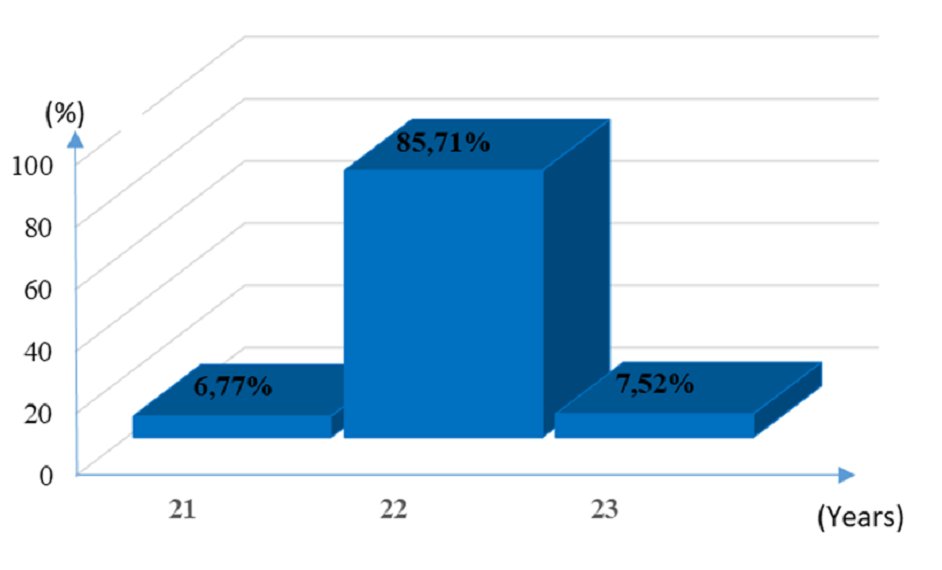
The participants’ ages ranged from 21 to 23 years, with a mean age of 22.01±0.38 years, indicating a very homogeneous age group. The median age was 22, matching the mean, which suggests a symmetrical distribution. In terms of frequency, the vast majority of participants were 22 years old (85.71%), while smaller proportions were 21 years old (6.77%) and 23 years old (7.52%) (Figure 1).
Figure 1. Distribution of participants by age
Descriptive Statistics of Pre- and Post-Training Scores
The data show an increase in mean (M) scores from pre-training to post-training across all measured variables (Table 1).
Statistical indexes
Pre-training
Perception
Comprehension
Projection
Total Score
Min
0
0
0
0
Max
5
2
2
9
Median
4
1
0
5
Interqurtile Range (IQR)
[3, 5]
[1, 1]
[0, 1.5]
[4, 7]
Mean
3.75
0.96
0.64
5.35
Standard Deviation (SD)
1.25
0.67
0.86
1.95
Post-training
Perception
Comprehension
Projection
Total Score
Min
0
0
0
1
Max
5
2
2
9
Median
4
1
1
6
Interqurtile Range (IQR)
[4, 5]
[1, 2]
[0.5, 2]
[5, 8]
Mean
3.98
1.17
1.17
6.32
Standard Deviation (SD)
1.19
0.62
0.80
1.76
Table1. Descriptive Statistics of Pre- and Post-Training Scores
Perception scores increased from M = 3.75, SD = 1.25 to M = 3.98, SD = 1.19. Comprehension scores increased from M = 0.96, SD = 0.67 to M = 1.17, SD = 0.62. Projection scores increased from M = 0.64, SD = 0.86 to M = 1.17, SD = 0.80. The total score increased from M = 5.35, SD = 1.95 to M = 6.32, SD = 1.76.
3. Pre- and Post-Training comparison
The Wilcoxon signed-rank tests were conducted to compare pre-training and post-training scores on Perception, Comprehension, Projection, and Total Score variables. Results indicated statistically significant increases across all measures following the training intervention. Specifically, the Perception scores showed a significant increase, Z = 4.71, p < 0.001, indicating a difference in median perception scores after training. Similarly, Comprehension scores increased significantly, Z = 5.01, p < 0.001, suggesting improved understanding post-training. Projection scores showed a larger effect, with Z = 6.44, p < 0.001, reflecting enhanced ability to apply or extend knowledge after training. The Total Score also increased significantly, Z = 7.70, p < 0.001, highlighting an overall improvement in combined performance measures (Table 2).
Variable
Test Statistic
Standardized
Z-Statistic)
p-value
Perception (pre vs post)
325.0
4.71
< 0.001
Comprehension (pre vs post)
351.0
5.01
< 0.001
Projection (pre vs post)
1326.0
6.44
< 0.001
Total Score (pre vs post)
2850.0
7.70
< 0.001
Table 2. Pre- and Post-Training comparison
Multivariate Linear Regression Analysis of Factors Associated with Improvement in Total Score
A multivariate linear regression analysis was conducted to examine whether demographic variables were associated with improvement in total score after the training intervention. The overall regression model was statistically significant (F = 12.90, p < 0.001) and explained 16.6% of the variance in score improvement (R² = 0.166, Adjusted R² = 0.153).
Sex was significantly associated with improvement in total score (B = −0.932, β = −0.407, p < 0.001), indicating that male participants showed greater improvement than female participants. In contrast, age was not significantly associated with changes in total score (B = 0.025, β = 0.008, p = 0.919), suggesting that the observed improvements were not influenced by participants’ age.
These findings indicate that the improvement in total score following the training intervention was primarily influenced by sex, while age did not play a significant role (see Table 3).
Variable
B
Standard Error (SE)
Standardized β
p-value
95% Confidence Interval
Sex
-0.932
0.183
-0.407
<0.001
-1.295 to -0.569
Age
0.025
0.242
0.008
0.919
-0.455 to 0.504
Constant
1.846
5.339
0.730
-8.716 to 12.408
Table 3. Multivariate Linear Regression Analysis of Factors Associated with Improvement in Total Score.
DISCUSSION
The present study examined the effect of simulation-based training on the situational awareness (SA) of final-year nursing students at the Higher Institute of Nursing Sciences of Tunis. Findings demonstrated significant improvements across all three dimensions of situational awareness perception, comprehension, and projection as well as in the overall SA score following simulation training. These results confirm the efficacy of simulation as a pedagogical strategy for strengthening cognitive and decision-making capacities that are critical for safe clinical practice.
Our findings are consistent with earlier work emphasizing the positive impact of simulation on nursing students’ knowledge acquisition, confidence, and decision-making abilities [4,6]. In particular, the observed improvement in projection scores aligns with [13] theoretical model of SA, in which the ability to anticipate future states represents the most advanced and clinically decisive dimension of situational awareness. Such gains suggest that immersive, scenario-based learning environments foster higher-order cognitive processing that extends beyond simple recognition or comprehension of patient data.
Moreover, this study contributes novel evidence in the Tunisian context, where research on simulation-based learning remains limited despite growing curricular reforms in nursing education [18,19]. Our results reinforce the idea that integrating simulation into undergraduate nursing curricula does not merely enhance psychomotor skills but also supports real-time cognitive processes essential for clinical safety and patient-centered care. This is particularly relevant given the documented importance of situational awareness in preventing adverse events and improving interprofessional team performance [9,10,12].
The current study found that demographic variables had a limited influence on improvement in total score following the training intervention. The multivariate regression model explained a modest proportion of variance (16.6%), suggesting that while sex significantly predicted improvement, the majority of performance gains were likely influenced by other factors such as baseline knowledge, prior experience, or engagement during training. Specifically, male participants demonstrated significantly greater improvement than female participants, whereas age was not associated with score changes. This finding aligns partially with prior simulation-based education research, which indicates that performance gains may be influenced by individual differences, although many studies report comparable improvements across sex and age groups [1,6,7]. The observed sex difference may reflect variations in confidence, prior exposure, or learning preferences within the study sample, rather than inherent ability, and should be interpreted cautiously. Overall, these results suggest that the training intervention effectively improved performance across participants, with sex-related differences accounting for a small but significant portion of the variance. Future research should explore additional factors, such as baseline competency and engagement levels, to better understand the predictors of skill acquisition in simulation-based training.
Another contribution of this study is the longitudinal assessment of SA. By conducting follow-up measurements three months after training, the results indicate that knowledge retention and cognitive benefits persist beyond the immediate post-simulation phase. This durability underscores the value of simulation as a sustainable educational strategy rather than a short-term intervention.
Despite these promising findings, several limitations should be acknowledged. First, the study relied on the adapted Situation Awareness Global Assessment Technique (SAGAT), which, although validated, may not fully capture the complexity of situational awareness in dynamic clinical environments. Second, this study employed a quasi-experimental single-group pre–post design without a control group, limiting causal inference. While significant improvements in situational awareness were observed, the absence of a control group prevents ruling out alternative explanations for the observed changes, such as concurrent learning experiences or natural maturation effects. The quasi-experimental design does not allow for causal inference with the same rigor as randomized controlled trials. Third, the study was confined to a single institution, potentially limiting the generalizability of results to other nursing programs with differing curricula, resources, or student populations. Fourth although the adapted SAGAT questionnaire was reviewed by nursing educators and clinical experts, a full psychometric validation was not conducted. Cronbach’s alpha (α = 0.633) indicated moderate internal consistency, and a few items had lower item–total correlations, which may affect the precision of situational awareness measurement.
Addressing these limitations in future research would strengthen the evidence base and allow for more nuanced insights into contextual factors that influence simulation effectiveness.
Future research should explore the integration of interprofessional simulation scenarios to evaluate how situational awareness develops in team-based contexts, which more closely mirror real-world healthcare environments [5]. Additionally, examining the role of structured debriefing in consolidating situational awareness would provide valuable pedagogical insights. Finally, comparative studies across diverse institutional and cultural settings would further validate the broader applicability of these findings.
CONCLUSION
This study provides empirical evidence that simulation significantly enhances nursing students’ situational awareness at all levels: perception, comprehension, and projection. The improvements observed both immediately and three months after training underscore the effectiveness of simulation not only as an instructional tool but also as a long-term capacity-building strategy in nursing education. By fostering the ability to detect, interpret, and anticipate clinical cues, simulation prepares students to act decisively in rapidly evolving healthcare contexts—an essential competency for ensuring patient safety and improving care outcomes. In the Tunisian context, where nursing education continues to align with international standards, these findings have important implications for curriculum design. Greater incorporation of simulation-based education may bridge the gap between theoretical knowledge and clinical competence, equipping future nurses with the cognitive agility and confidence necessary for professional practice.
Ultimately, embedding structured, simulation into nursing programs is not merely an educational innovation but a pedagogical imperative. As healthcare systems face increasing complexity, preparing nurses with advanced situational awareness through simulation represents a crucial step toward improving both individual clinical performance and overall quality of patient care.
Local Ethics Committee approval
The study was approved by the Institutional Review Board (IRB) of the Higher Institute of Nursing Sciences of Tunis (Approval No.: 01-07-10/2024; Date: 07/10/2024).. All procedures were conducted in accordance with the principles of the Declaration of Helsinki and relevant ethical guidelines for research involving human participants. Participant anonymity and data confidentiality were strictly maintained throughout all stages of the study. This study was conducted in accordance with ethical standards. All participants provided informed consent prior to participation.
Conflicts of interest
The authors declare no conflict of interest.
Sources of funding
This research did not receive any specific grant from funding agencies in the public, commercial, or not-for-profit sectors.
Author contributions
Conception and design: Abdelbasset Ghalgaoui
Data collection: Rihab Salhi, Sawsen Rahmani
Data analysis and interpretation: Abdelbasset Ghalgaoui
Drafting of the manuscript: All authors
Critical revision of the manuscript: All authors
Final approval of the manuscript: All authors.
Acknowledgements
The authors would like to thank the administration, faculty members, and students of the Higher Institute of Nursing Sciences of Tunis for their cooperation and support during the conduct of this study.
REFERENCES1. Lin M-Y, Huang M-Z, Lai P-C. Effect of virtual reality training on clinical skills of nursing students: A systematic review and meta-analysis of randomized controlled trials. Nurse Education in Practice. Elsevier; 2024;81:104182. https://doi.org/10.1016/j.nepr.2024.104182
2. Benfatah M, Youlyouz-Marfak I, Saad E, Hilali A, Nejjari C, Marfak A. Impact of artificial intelligence-enhanced debriefing on clinical skills development in nursing students: A comparative study. Teaching and Learning in Nursing. Elsevier; 2024;19:e574–9. https://doi.org/10.1016/j.teln.2024.04.007
3. Alinier G, Shehatta AL, Makker R. Simulation for Clinical Skills in Healthcare Education. In: Nestel D, Reedy G, McKenna L, Gough S, editors. Clinical Education for the Health Professions [Internet]. Singapore: Springer Nature Singapore; 2023 [cited 2026 Mar 8]. p. 1395–415. https://doi.org/10.1007/978-981-15-3344-0_93
4. Fegran L, ten Ham-Baloyi W, Fossum M, Hovland OJ, Naidoo JR, van Rooyen D (R. M, et al. Simulation debriefing as part of simulation for clinical teaching and learning in nursing education: A scoping review. Nursing Open. 2023;10:1217–33. https://doi.org/10.1002/nop2.1426
5. Jonsson K, Brulin C, Härgestam M, Lindkvist M, Hultin M. Do team and task performance improve after training situation awareness? A randomized controlled study of interprofessional intensive care teams. Scandinavian Journal of Trauma, Resuscitation and Emergency Medicine. 2021;29:73. https://doi.org/10.1186/s13049-021-00878-2
6. Kiegaldie D, Shaw L. Virtual reality simulation for nursing education: effectiveness and feasibility. BMC Nurs. 2023;22:488. https://doi.org/10.1186/s12912-023-01639-5
7. Li YY, Au ML, Tong LK, Ng WI, Wang SC. High-fidelity simulation in undergraduate nursing education: A meta-analysis. Nurse Education Today. 2022;111:105291. https://doi.org/10.1016/j.nedt.2022.105291
8. Abdalhafith O, Rababa M, Hayajneh AA, Alharbi TAF, Alhumaidi B, Alharbi MN. Critical care nurses’ knowledge, confidence, and clinical reasoning in sepsis management: a systematic review. BMC Nursing. 2025;24:424. https://doi.org/10.1186/s12912-025-02986-1
9. Holtsmark C, Larsen MH, Steindal SA, Solberg MT. Critical care nurses’ role in rapid response teams: A qualitative systematic review. Journal of Clinical Nursing. 2024;33:3831–43. https://doi.org/10.1111/jocn.17196
10. Komatsu H, Hara A, Koyama F, Komatsu Y. Enhancing High Reliability in Oncology Care: The Critical Role of Nurses—A Systematic Review and Thematic Analysis. Healthcare. Multidisciplinary Digital Publishing Institute; 2025;13:283. https://doi.org/10.3390/healthcare13030283
11. Padinha S, Fernandes JB, Castro C. Nursing Interventions in Approaching Trauma Victims: Scoping Review. Journal of Clinical Medicine. Multidisciplinary Digital Publishing Institute; 2025;14:3016. https://doi.org/10.3390/jcm14093016
12. Rae PJL, Pearce S, Greaves PJ, Dall’Ora C, Griffiths P, Endacott R. Outcomes sensitive to critical care nurse staffing levels: A systematic review. Intensive Crit Care Nurs. 2021;67:103110. https://doi.org/10.1016/j.iccn.2021.103110
13. Endsley MR, Garland DJ. Situation awareness analysis and measurement [Internet]. CRC press; 2000 [cited 2025 July 3]. https://books.google.com/books?hl=fr&lr=&id=WrJGDsjJakcC&oi=fnd&pg=PP1&dq=situation+awareness+Mica+R.+Endsley&ots=XK9hwqYsAP&sig=-iBAwX3BfYJ0z2IqyguSRMyWCzs. Accessed 3 July 2025
14. Sun Y, Li X, Liu H, Li Y, Gui J, Zhang X, et al. The effectiveness of using situational awareness and case-based seminars in a comprehensive nursing skill practice course for undergraduate nursing students: a quasi-experimental study. BMC Med Educ. 2024;24:118. https://doi.org/10.1186/s12909-024-05104-y
15. Caloca-Amber S, Mauriz E, Vazquez-Casares AM. Exploring eye-tracking data as an indicator of situational awareness in nursing students during a cardiorespiratory arrest simulation. Nurse Education in Practice. Elsevier; 2024;76:103911. https://doi.org/10.1016/j.nepr.2024.103911
16. Chandanani M, Laidlaw A, Brown C. Extended reality and computer-based simulation for teaching situational awareness in undergraduate health professions education: a scoping review. Adv Simul. 2025;10:18. https://doi.org/10.1186/s41077-025-00343-5
17. Priambodo AP, Nurhamsyah D, Lai W-S, Chen H-M. Simulation-based education promoting situation awareness in undergraduate nursing students: a scoping review. Nurse Education in Practice. Elsevier; 2022;65:103499. https://doi.org/10.1016/j.nepr.2022.103499
18. Bdiri Gabbouj S, Zedini C, Naija W. Nursing Students’ Satisfaction and Self-Confidence with Simulation-Based Learning and Its Associations with Simulation Design Characteristics and Educational Practices. Advances in Medical Education and Practice. Dove Medical Press; 2024;15:1093–102. https://doi.org/10.2147/AMEP.S477309
19. Bdiri Gabbouj S, Zedini C, Naija W. Effect of Simulation-Based Education of Adult BLS-CPR on Nursing Students’ Skills and Knowledge Acquisition. Advances in Medical Education and Practice. Dove Medical Press; 2025;16:663–73. https://doi.org/10.2147/AMEP.S500156
20. Endsley MR. Direct measurement of situation awareness: Validity and use of SAGAT. Situational awareness [Internet]. Routledge; 2017 [cited 2026 Mar 10]. p. 129–56. https://api.taylorfrancis.com/content/chapters/edit/download?identifierName=doi&identifierValue=10.4324/9781315087924-9&type=chapterpdf. Accessed 10 Mar 2026
21. Crozier MS, Ting HY, Boone DC, O’Regan NB, Bandrauk N, Furey A, et al. Use of human patient simulation and validation of the Team Situation Awareness Global Assessment Technique (TSAGAT): a multidisciplinary team assessment tool in trauma education. Journal of Surgical Education. Elsevier; 2015;72:156–63. https://doi.org/10.1016/j.jsurg.2014.07.001

This work is licensed under a Creative Commons Attribution-NonCommercial-NoDerivatives 4.0 International License.